Triangular Over/Under Spray Arms — How the Geometry Works
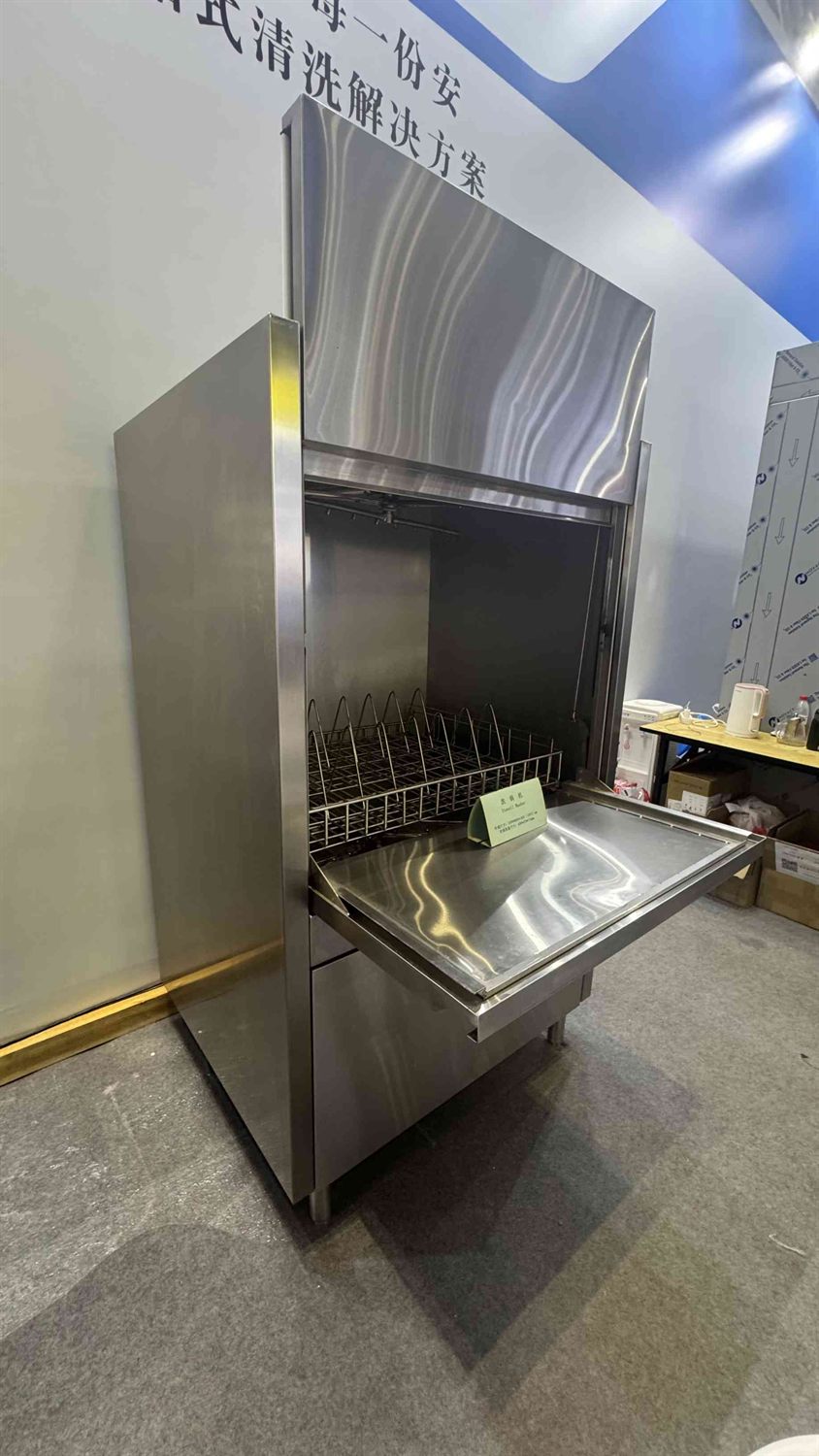
The CE-UWL’s wash arms use a triangular over/under geometry: three jet axes per arm rotating around a fixed pivot, with one arm above the rack and one below. The wider spray pattern shortens the line of sight from any jet to any point in the chamber, reducing the shadow zones that classic cross arms leave behind.
The classical layout
Most door-type pot washers use an X- or cross-shaped rotating arm above and below the rack. The cross has two axes and four jet runs; as it sweeps, the area immediately around the pivot and along the diagonals between arms receives less direct spray.
Our triangular layout
The CE-UWL replaces the cross with a triangular arm — three jet axes radiating from the pivot. Both the upper and the lower plane of the chamber carry an arm, so cookware is hit from above and below simultaneously. The third axis fills the diagonal gaps a cross leaves open.
Why this matters in practice
More jet axes mean more uniform coverage and fewer shadow zones — the spots a jet can never reach directly because cookware blocks the line of sight. A shorter average line of sight from a jet to any surface means baked-on soil is struck more directly, so it lifts faster.
Measured outcomes
With a wash temperature of 68–70 °C and the triangular spray, a single 3–5 minute cycle removes baked-on starches and caramelized sugars that would otherwise need hand-scrubbing. The final 85 °C rinse flushes loosened soil and sanitizes.