
Front access, built-in loading platform
Open the split door and use the lower panel to support loading and unloading at chamber level. This is a cookware-handling feature shared with some imported split-door machines. It is not a preparation bench; confirm permitted door load and front clearance before installation.
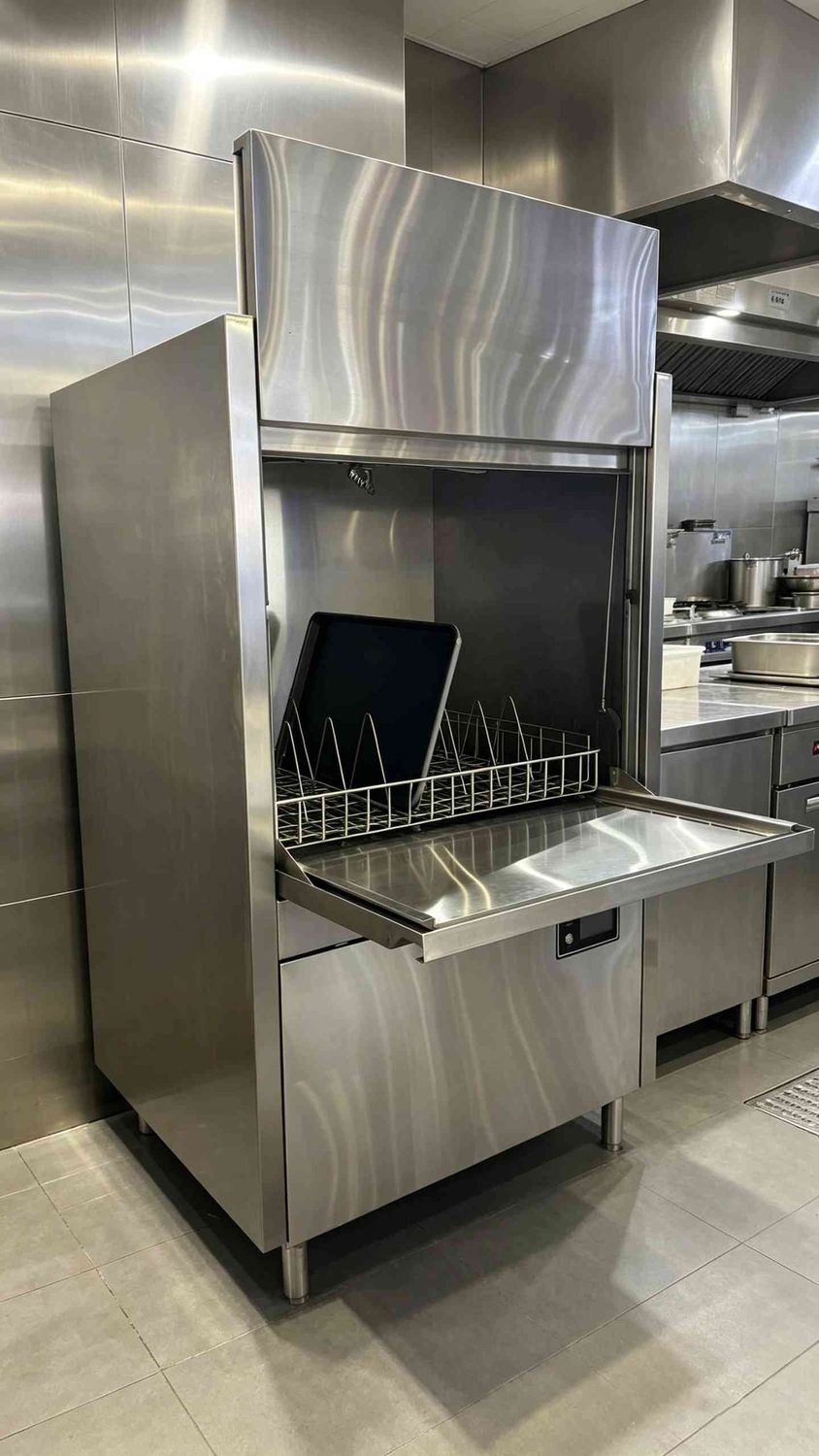
Front access, built-in loading platform
Open the split door and use the lower panel to support loading and unloading at chamber level. This is a cookware-handling feature shared with some imported split-door machines. It is not a preparation bench; confirm permitted door load and front clearance before installation.
Designed around bulky cookware
CE-UWL serves bakeries, restaurants, hotels and central kitchens handling mixed pots, pans and bowls. Its published chamber is 820 × 670 × 660 mm. Confirm fit, rack inserts and spray access with your actual cookware. For an entire bakery trolley, evaluate a roll-in rack washer; for plates and glasses, compare a dishwashing system.
Learn more →Compare the complete purchase, not just the sticker
The CE-UWL FOB Shenzhen price is USD 9,999. The EXW factory price is lower and is quoted for the confirmed configuration. FOB is not a delivered, installed price; add freight, insurance, import charges, installation and local service when comparing with a distributor quote.
See Country Pricing →Verify the configuration before ordering
Rated throughput is 12–20 batches per hour; one batch means one complete wash cycle. Actual output depends on the selected 3–5 minute cycle and loading and unloading time. Request a loaded wash demonstration, utility requirements, destination-specific compliance documents, warranty scope and a parts/service plan.
Get a Quote →